Princess Diamond Guide
Modern, square and intensely brilliant.
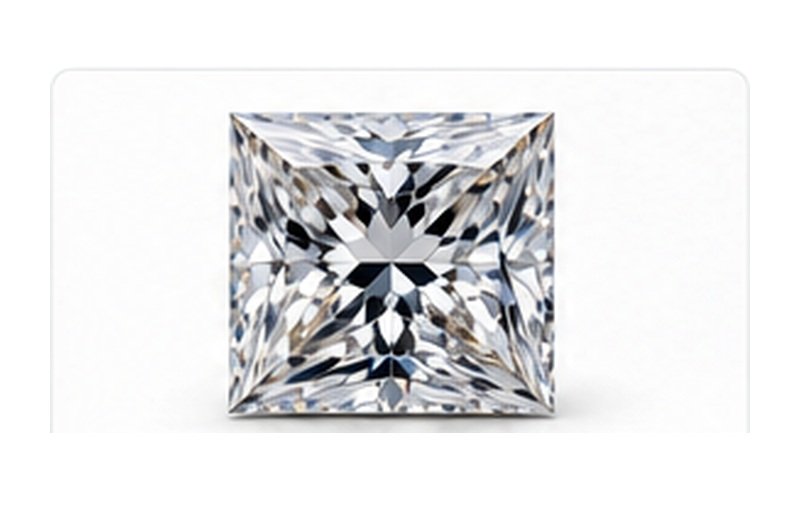
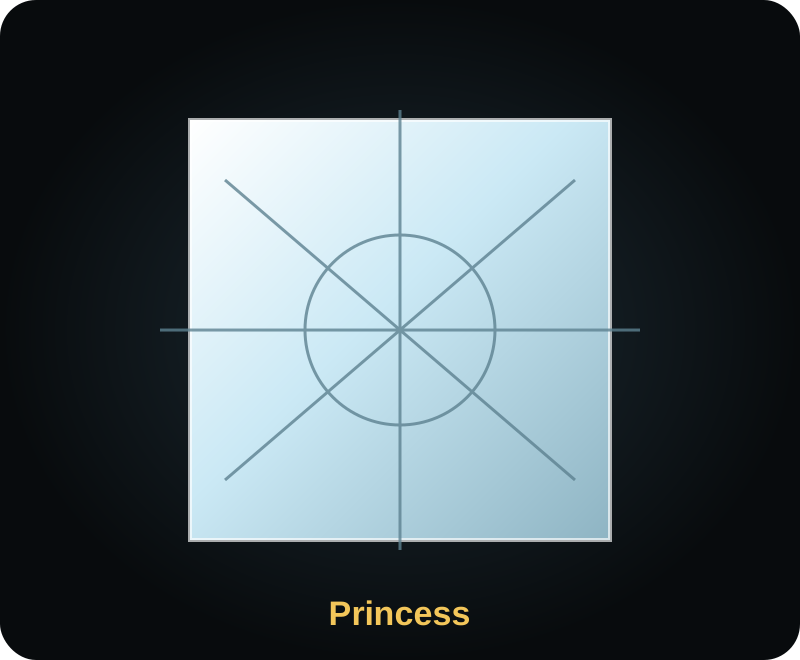
What makes a good princess diamond?
Look for lively, even brightness rather than a large dead center or obviously uneven light distribution. There is more variation than a simple table/depth chart can capture.
Proportions and face-up size
A near-square ratio is typical, but some stones are slightly rectangular. Compare face-up dimensions because deep stones can carry hidden weight.
Carat is weight. Princess cuts frequently hide mass in depth—two “1.00 ct” princesses can differ by ~0.5 mm face-up. Shop width × length in millimeters, then confirm the corners survive magnified inspection.
Color and clarity
Brilliant princess faceting conceals many small inclusions, but the open square table still shows dark center crystals. Corners are structural weak points: feathers or cavities at a point are durability issues, not just beauty issues.
Color on near-square princesses usually behaves closer to rounds than to step cuts. Compare G–H against higher grades in white metal; save extreme colorless budgets for stones where you can actually see a difference face-up.
What to inspect in 360° video
- Even, lively square brightness—not a dark cross or dead center.
- Corner integrity: chips, frosted points, or open feathers on any tip.
- Ratio that still reads square (about 1.00–1.05 for most shoppers).
- Whether crushed or blocky scintillation matches the look you want.
- Face-up mm versus carat so depth is not stealing size.
Loose princess cuts: size and corners
“Princess cut loose diamond” listings look cheap per carat next to rounds. Some of that is real; some of it is depth. A princess can hide a lot of weight below the girdle and look smaller face-up than a well-cut round of the same carat.
- Ratio. Most shoppers want 1.00–1.05 so the outline reads square. At 1.08+ it starts to look like a short radiant.
- Millimeters over carat. Compare width × length. Two “1.00 ct princess” stones can differ by half a millimeter face-up.
- Corners. The four points chip. Budget for a setting that actually covers them (prongs on the points, or a bezel). A loose stone with a report nick on a corner is not a bargain.
- Light. Look for an even, lively square — not a dark cross or a dead center that never lights up in video.
Best buying strategy
- Filter for near-square ratios and publish mm size before carat pride.
- Require corner-safe settings in your budget (prongs on points or bezel).
- Reject stones with corner damage on the plot or in magnified video.
- Pick color/clarity from video; brilliant pattern can allow sensible SI–VS trade-offs.
- Compare three princesses with matched width and similar depth percentages.
Ready to compare real diamonds?
Use the education above to compare stones with matching grading criteria. These are affiliate links; Naked Diamonds may earn a commission if you purchase, at no extra cost to you.
Educational reference: GIA diamond-quality and shape guidance. Fancy-shape appearance varies materially from stone to stone, so ratios and measurements are screening tools rather than guarantees.