Diamond Clarity
Learn to judge inclusions by visibility, location and effect—not by grade alone.

Diamond Clarity: Buy What Your Eye Can See
Clarity grading is performed under magnification. Your buying decision happens at normal viewing distance. The goal is usually not the highest grade—it is a diamond whose characteristics do not distract from beauty or threaten durability.
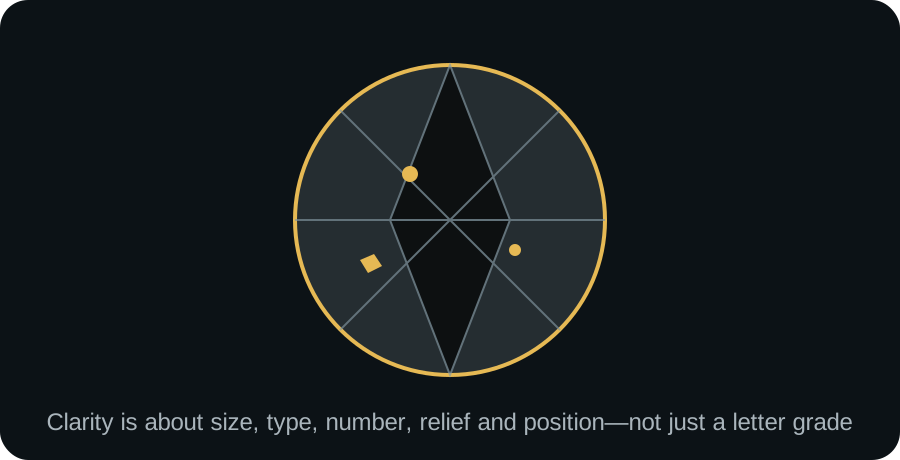
How clarity is judged
GIA clarity grading considers the size, nature, number, position and relief of internal characteristics (inclusions) and surface characteristics (blemishes), evaluated under 10× magnification. The scale runs from Flawless through Included grades.
“Eye-clean” is useful—but not a laboratory grade
Retailers often use eye-clean to mean that inclusions are not readily visible without magnification. That can be a valuable shopping concept, but viewing distance, eyesight, lighting and stone size all matter. Ask what the retailer means by the term rather than assuming a universal standard.
Location matters
A small dark crystal directly under the table can be more noticeable than a larger transparent inclusion near the edge. Feathers near a vulnerable corner or very thin girdle deserve extra attention because durability is part of the buying decision, not just appearance.
| Situation | What to inspect |
|---|---|
| Brilliant cuts | Dark crystals, clouds, centrally located inclusions and whether the pattern hides them. |
| Emerald / Asscher | Step facets make the interior easier to see; clarity often deserves more attention. |
| Larger diamonds | Characteristics are physically larger at the same clarity grade, so inspect carefully. |
| Cornered shapes | Check feathers and chips near princess, pear and marquise points. |
How to shop clarity intelligently
Start in a middle clarity range, inspect the actual stone, and move upward only when inclusions are visible, distracting or create a durability concern. A higher clarity grade does not increase sparkle by itself.
Core gemology references: Gemological Institute of America (GIA) diamond education and research materials. Consumer terminology and disclosure principles: U.S. Federal Trade Commission Jewelry Guides. Last reviewed August 2026.